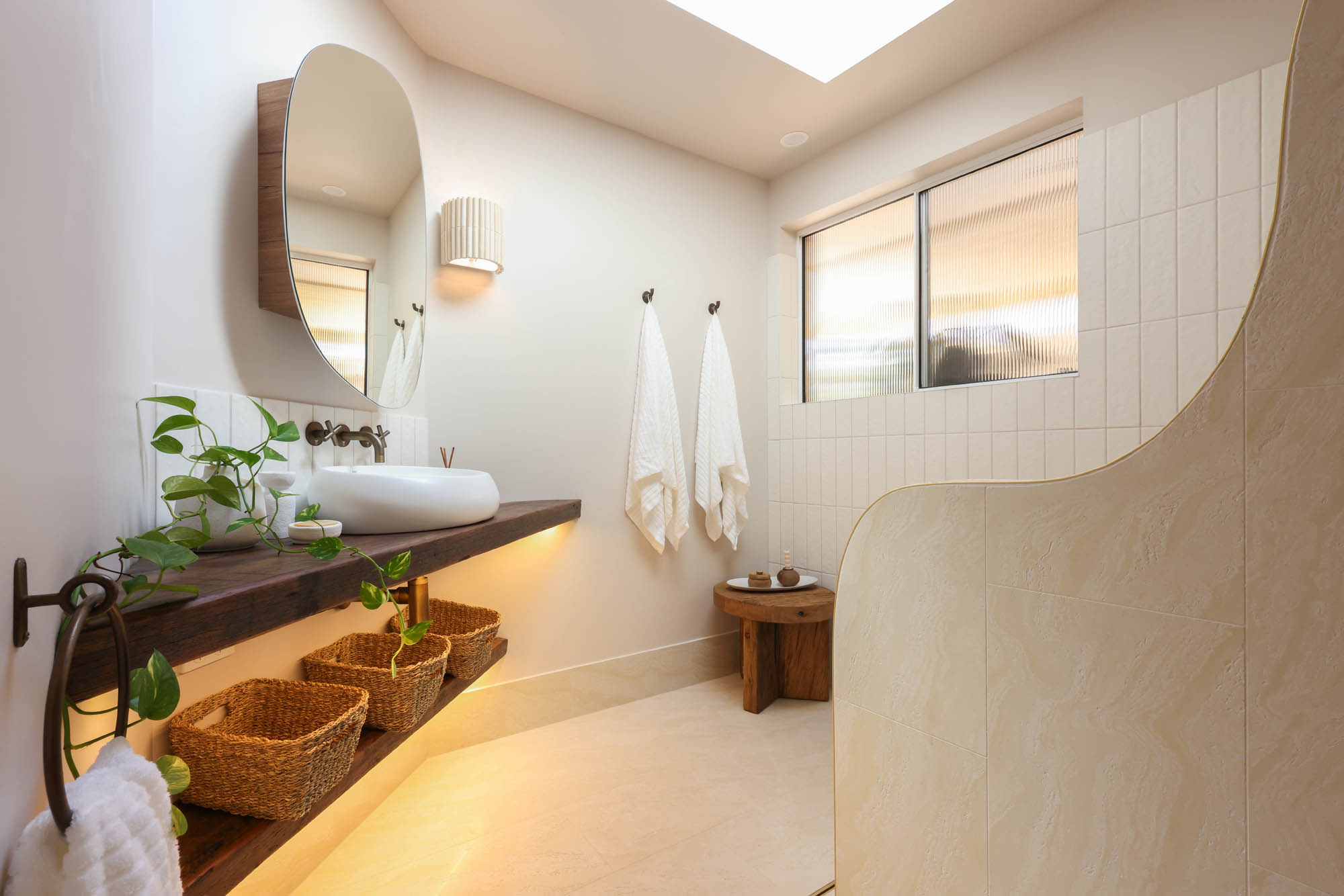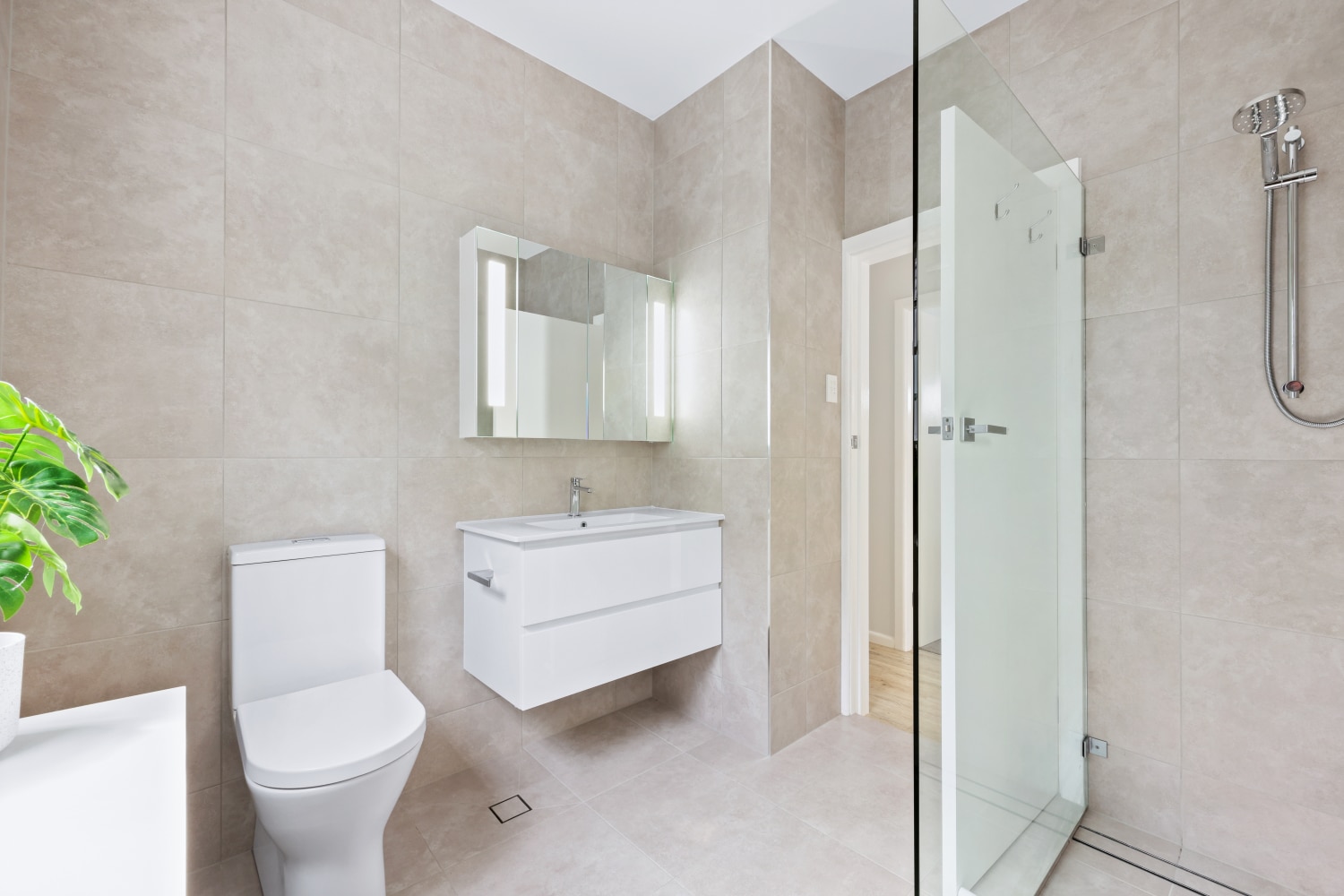
Knock out a wall in the right bathroom, and the whole room changes. That is the appeal of open-plan design: wet rooms with fully waterproofed floors and no shower screen in sight, ensuites that spill into the master bedroom, master bathroom suites built around a freestanding bath with room to breathe. Across the Mid-North Coast and Northern Beaches, these layouts have become one of the most requested features in residential renovations.
They are also not right for every home. This article covers the genuine benefits and the real drawbacks, so you can decide whether open-plan is the right move before the walls come down.
What Is an Open-Plan Bathroom?
An open-plan bathroom removes or minimises the walls and partitions that divide a standard bathroom into separate zones. Rather than an enclosed shower recess, a closed-off toilet and a vanity wedged into whatever space is left, everything is brought together into one cohesive room. It is worth noting that open-plan exists on a spectrum. At one end is the fully open wet room, where the shower floor is flush with the rest of the room, and there is no screen at all. At the other end are layouts that use frameless glass panels or low partitions to define zones while keeping the visual openness. Both approaches differ fundamentally from the enclosed, compartmentalised layouts that still dominate most Australian homes.
The most common formats are wet rooms, where the entire floor is waterproofed, and the shower area runs without a screen or enclosure; ensuite extensions that open directly to the master bedroom through glass or a wide, unobstructed entry; and full master bathroom suites that combine a soaking bath, double vanity and walk-in shower in a single, generously proportioned space.
This approach suits the NSW coastal lifestyle particularly well. From the Northern Beaches suburbs of Manly, Curl Curl and Queenscliff through to Port Macquarie, South West Rocks and the broader Mid-North Coast, homes here are built around light, air and connection to the outdoors. An open ensuite bathroom or wet room design extends that sensibility into a space that is often treated as purely functional.

Benefits of Open-Plan Bathrooms
1. Spaciousness and Flow
The most immediate effect of removing walls is the sense of scale. A bathroom that connects visually to the master bedroom reads as considerably larger than its actual footprint, even without changing a single dimension. Glass partitions and frameless shower screens extend this further by maintaining a degree of separation without breaking up the sightlines. For anyone who has lived with a cramped ensuite, the difference is significant. The space feels less like a utility room and more like a room worth being in.
2. Modern and Luxurious Appeal
Open-plan bathrooms and high-end finishes go hand in hand. Freestanding baths, frameless walk-in showers, continuous large-format floor tiles, floating vanities and exposed tapware all look their best when they are not competing with walls, doors and awkward corners. Without those interruptions, the design reads as intentional rather than improvised. For homeowners considering resale value, a well-executed open-plan ensuite is one of the more compelling things a property can offer. You can read more about renovating for value on our website.
3. Increased Natural Light
Enclosed bathrooms are often dark by design. Internal walls block daylight, and small windows are the norm. An open-plan layout changes this: light from the bedroom travels through to the bathroom, and a well-placed skylight above the wet room area or a highlight window above the bath can make the room feel bright throughout the day. In coastal NSW homes, where rooms are typically oriented to capture morning light and prevailing breezes, this is one of the more noticeable day-to-day benefits.
4. Flexibility in Design
Without fixed walls dictating the layout, you have much more freedom in how the space is arranged. A double vanity can be positioned to face natural light. A freestanding bath can anchor the centre of the room rather than being pushed into a corner. Recessed niches, custom joinery and integrated storage can be built around how you actually use the space. This flexibility is one of the reasons open-plan bathrooms tend to feel more considered than a standard renovation, and it is part of what makes them worth the investment when the design is handled well.
Drawbacks to Consider
1. Privacy Concerns
For shared or family use, open-plan bathrooms are often simply not suitable without very careful design. In a home with teenagers, young children or regular guests, a bathroom that opens directly to a bedroom is a practical problem, not just a stylistic one. Privacy is not a minor consideration here; for many households, it is a deal-breaker. Even between partners, some people want a door, and that preference is worth taking seriously before committing to a layout. Where privacy matters but the open aesthetic is still desired, solutions exist: a frosted or obscure glass panel to screen the toilet, a full-height louvre screen at the bedroom entry, or a short partition wall positioned to block sightlines without enclosing the space. But these need to be planned from the start, not retrofitted after the fact.
2. Heating and Comfort
A large open space loses heat faster than a compact, enclosed one. On a cold winter morning on the coast or in a breezy hillside property, stepping out of the shower into an unheated open room is a long way from the resort experience the design promises. Hydronic underfloor heating is the most effective solution and performs particularly well beneath the large-format tiles common in this style. A quality heated towel rail also helps. Beyond warmth, moisture management is a serious consideration that is easy to underestimate. When a bathroom opens directly into a sleeping area, steam and humidity do not stay in the bathroom. Without high-performance mechanical ventilation, moisture can migrate into the bedroom, creating conditions for mould growth in walls, ceiling cavities and soft furnishings. A well-specified exhaust system is not optional in an open ensuite — it is fundamental to the design working long-term.
3. Increased Renovation Costs
Opening up a bathroom almost always involves structural work, and structural work adds cost. On top of that, open-plan designs require waterproofing across a significantly larger area than a standard wet zone, and under NSW building standards, this cannot be rushed or cut back. The fixtures and finishes that make this style work — freestanding baths, frameless glass, large-format tiles, custom joinery — sit at the higher end of the market. As a rough guide, a well-executed open-plan ensuite renovation will typically run 20 to 40 per cent higher than a comparable standard bathroom renovation, depending on layout complexity and finish level. A realistic budget needs to account for all of it. None of this makes an open-plan bathroom poor value, but it is important to go in with an accurate picture. Our FAQ page explains how we scope and quote renovation projects.
4. Maintenance
The clean, minimalist look that defines this style of bathroom requires consistent upkeep to maintain it. Open wet areas spread water across a broader floor surface, and large expanses of tile, glass and tapware will show limescale, soap residue and water marks if they are not cleaned regularly. The good news is that material selection makes a real difference. Matte tiles are more forgiving than polished ones. Quality glass treatments significantly reduce spotting on frameless screens. Sealed grout and durable tapware finishes are worth specifying from the start. With the right choices made at the design stage, the cleaning burden is manageable rather than punishing. In a true wet room, floor grading and drainage must be precisely designed to prevent water pooling, and slip-resistant tiles should meet Australian safety standards — worth confirming with your renovation team early in the design process.

Is an Open-Plan Bathroom Right for You?
The answer depends on how your household works and what you are genuinely trying to achieve. A master ensuite shared by a couple, in a contemporary or coastal property, with a budget that allows for quality finishes and proper waterproofing — that is the ideal candidate. A busy main bathroom used by the whole family morning and night is a different situation entirely, and a different layout will likely serve it better.
Property type matters too. Open-plan bathrooms feel at home in modern builds, architect-designed houses and the kinds of relaxed coastal properties found from the Northern Beaches to the Mid-North Coast. In a heritage home or a more traditionally styled property, the same approach can feel mismatched. The best starting point is a conversation with someone who understands both the design possibilities and the practical realities of building in your area.
Done well, an open-plan bathroom can be one of the most rewarding upgrades in a home — but it depends entirely on the context and the execution. Thinking about an open-plan bathroom or wet room? Blue Sky Home Renovations can guide you through design, layout and construction for your NSW home. Get in touch for an obligation-free quote or get a free design consultation today.

The Bottom Line
Bathroom renovation timelines depend on scope, selections, and trade scheduling.
For most professionally managed bathroom renovations, the construction phase usually takes around 3–5 weeks from demolition through to final clean.
Planning, confirming selections early, and working with experienced trades can help ensure the project runs smoothly from start to finish.
Want to know how long it will take to finish your bathroom? Request a quote or timeline estimate today. Check out our Projects and see work in Port Macquarie, Taree, and the Northern Beaches.